


Guidelines | Responsible AI Use in Child Protection in Humanitarian Action
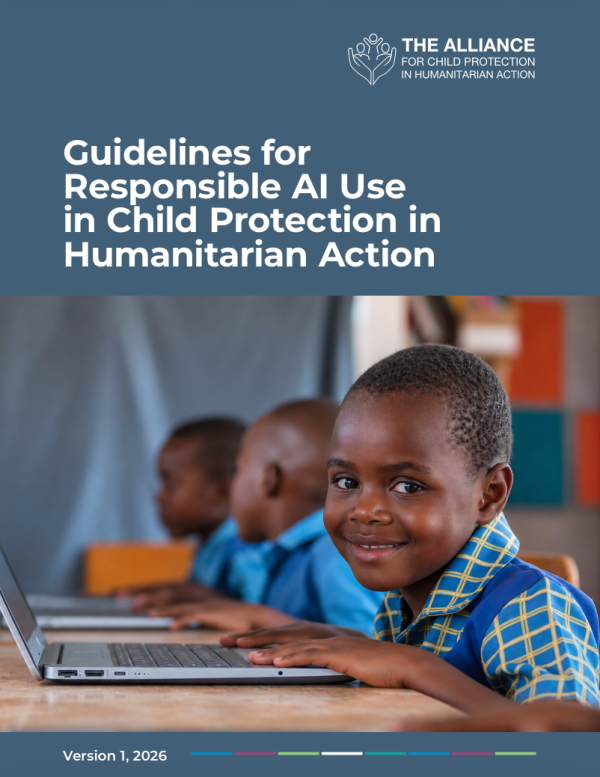
AI tools are already part of everyday work in child protection, yet most practitioners use them without clear, sector-specific guidance. The Alliance's Guidelines for Responsible AI Use in Child Protection in Humanitarian Action help practitioners and organisations use AI responsibly, with children's safety, rights, and well-being at the centre.
Developed with input from child protection practitioners across national and local NGOs, INGOs and UN agencies, including a survey of 114 respondents and a validation workshop, the guidelines set out ten principles, a clear classification of which AI uses are allowed, which need caution and which are prohibited, and practical steps for both individual practitioners and organisations. They apply to any use of AI in child protection work, from general-purpose assistants and translation tools to AI features built into everyday software, and they are designed to complement your organisation's existing data protection, safeguarding, and AI policies.
Whether your organisation already has an AI policy, is just starting to develop one, or has none at all, the guidelines and the quick-reference tools below will help you decide when AI is appropriate, how to protect children's data, and how to keep professional judgement at the heart of every decision.
The Guidelines and Tools:
Guidelines for Responsible AI Use in Child Protection in Humanitarian Action
The full guidance. It covers the main risks of AI in child protection, the ten principles, recommended actions for practitioners and organisations, a use case classification, examples of responsible and irresponsible use, and an AI impact assessment template for organisations.
10 Principles for Responsible AI Use
A one-page summary of the foundation of the guidelines, covering safety and do no harm, data protection, human primacy in decisions, accuracy and verification, fairness, transparency, data security, proportionality, child participation, and local and cultural relevance.
AI Use Classification: What's Allowed, What Needs Caution, and What's Prohibited?
A quick reference guide that rates common AI uses, such as writing, translation, training materials, meeting transcription and AI-generated imagery, as green, yellow, or red. It shows at a glance which tasks are generally fine, which need safeguards, and which should never be done with AI.
Decision Tree: Should I Use AI for This Task?
A step-by-step tool that walks you through four questions about your task, from whether it involves a child's data to whether the output will inform a decision about a child. It tells you whether to stop, proceed with checks, or require human review before acting.
Practical Checklists
Three checklists to use day to day: a Data Checklist (before entering anything into an AI tool), a Verification Checklist (before using an AI output), and a Human Risk Checklist (before acting on AI output in a decision about a child).
Feedback and Updates:
This is a living document, reviewed annually or sooner if laws, tools, or circumstances change, so please check back for the latest version.
Feedback and suggestions are welcome at learning@alliancecpha.org.