

تتم إدارتها من قبل: المنظمة الدولية للرؤية العالمية واليونيسيف إينوشينتي - المكتب العالمي للبحوث والاستشراف
مهمتنا
تم تأسيس مجموعة عمل التقييم والقياس والأدلة بهدف منح العاملين في مجال حماية الطفل الأدوات والأدلة والمهارات التي يحتاجونها للحصول على نتائج أفضل لبرامج حماية الأطفال في السياقات الإنسانية. نركز في مجموعة العمل على تعزيز قدرتنا على اتخاذ القرارات القائمة على الأدلة، وتشجيع التعاون، وتطوير وبناء القدرات بما يسهم في توظيف البيانات والتحليلات على أفضل وجه في عملية تصميم البرامج وتنفيذها.
الأولويات الرئيسية لمجموعة عمل التقييم والقياس والأدلة
- تطوير الأدوات ومشاركتها: نقوم بإعداد ومراجعة ونشر الأدوات والمنهجيات التي تساعد الممارسين على تقييم برامج حماية الطفل ومراقبتها بفعالية.
- تطوير الأدلة ومشاركتها: نعمل على تجميع وتحليل ومشاركة الأدلة لدعم تطوير وتحسين أنظمة حماية الطفل في السياقات الإنسانية.
- بناء القدرات: نقدم التدريب والتوجيه والموارد اللازمة لتطوير مهارات الممارسين والمنظمات فيما يتعلق باستخدام الأدلة وأدوات التقييم.
- التعاون بين المجموعات: نقدم الدعم لمجموعات العمل الأخرى والفرق المتخصصة لتعزيز أنشطتها وبرامجها بالمناهج القائمة على الأدلة، بما في ذلك تطوير منهجيات وأطر عمل مشتركة.
Latest News
New Survey: How Are Funding Cuts Affecting Children’s Protection?
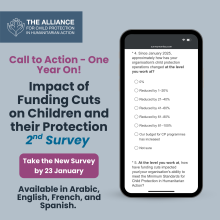
New Briefing Note! Global Impact of Humanitarian Funding Cuts on Children’s Protection

Working Group Member Organisations




Key Tools

Brief | Global Impact of Funding Cuts on Children and their Protection in Humanitarian Contexts

Children have the right to be protected from abuse, neglect, exploitation, and violence. Yet, in humanitarian crises children suffer first and most, with devastating consequences for their immediate safety and long-term well-being. The humanitarian system is under unprecedented strain. Major donors, including the US and key European governments, have drastically reduced humanitarian funding or
Guidance Note | Resources for Conducting Ethical Research with Children in Humanitarian Contexts

This Resource List catalogues critical resources to guide ethical good practices in participatory research with children in humanitarian contexts. It is not an exhaustive compilation, nor does it propose new ethical guidelines. Instead, it highlights existing tools that help researchers and practitioners understand, utilise, and apply well-established ethical principles.
These resources are
Enhanced CPMS Indicators Table

An easy-to-navigate PDF, the Enhanced CPMS Indicators Table includes the 28 Child Protection Minimum Standards and their indicators with type, target values and explanatory notes plus suggested computation methods and data source examples. Developed by the Assessment, Measurement and Evidence Working Group, this tool is part of the measurement framework of the CPMS 2019 edition.
Resources

Child Protection Rapid Assessment (CPRA) Toolkit Review

Briefing Note | Setting the Global Research Agenda for Child Protection in Humanitarian Contexts

Site Specific Child Protection Rapid Assessment: A guidance note

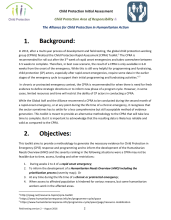
Child Protection in Emergencies Initial Assessment (CPIA)
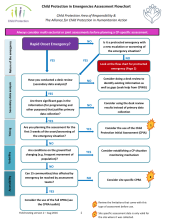
Child Protection in Emergencies Assessment Flowchart
Webinars
Webinar | Enhancing Parenting Practices in Humanitarian Settings: Evidence and Strategies

Webinar | Harnessing AI and Secondary Data for Smarter Child Protection in Humanitarian Contexts

Webinar | Strategic Advocacy and Funding in CPHA: Leveraging Data and Evidence for Success

Webinar | Capturing Voices: Evidence Generation for CAAFAG