


Risk-informed Education Programming for Resilience
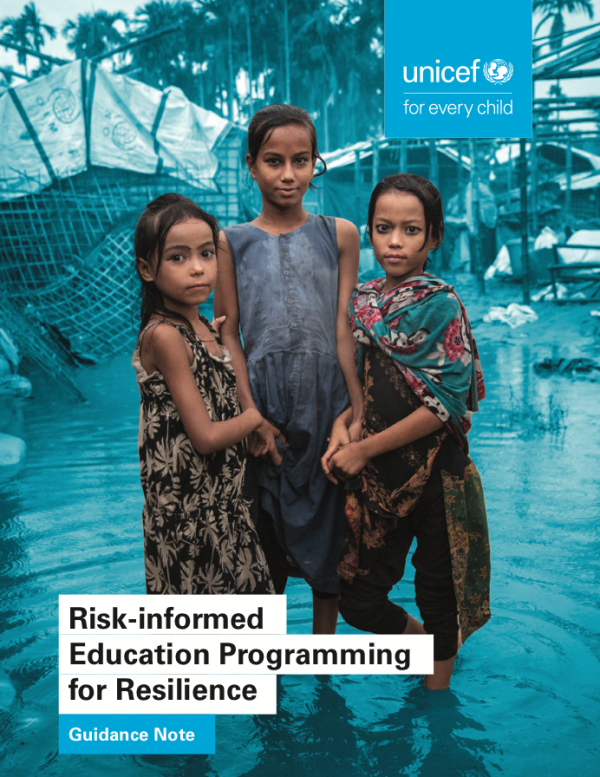
Crisis—such as conflict, natural disaster, climate change and other hazards, shocks and stresses— has a destructive impact on people and systems and can prevent states from reaching development goals. Over the past 20 years, natural disasters have affected roughly 4.4 billion people and caused US$2 trillion in economic losses. By the end of 2016, 65.6 million people were displaced from their homes because of war, violence and persecution. Children are disproportionately affected by crisis, and often deprived of basic needs like education, healthcare and shelter. While current development and humanitarian approaches in hazard-affected contexts play an important role in improving living conditions, evidence shows that they are not enough to fulfill the rights of all children. Across the continuum of development and humanitarian activities, policies and programs must be informed by risk if they are to help make populations more resilient and social services better equipped to withstand cycles of crisis.
- 152 views