

تتم إدارتها من قبل: منظمة بلان إنترناشونال، ومنظمة العمل الدولية ILO
مهمتنا
ضمان التنسيق والتعاون العملي بين العاملين في المجال الإنساني والجهات الفاعلة في مجال التنمية على المستوى العالمي، وذلك لتحسين جودة التدخلات ومستويات التنسيق والتأهب لعمالة الأطفال، وتطوير إجراءات الوقاية والاستجابة في حالات الطوارئ على المستوى القطري.
توفر فرقة العمل منصة للتعرف على التحديات المشتركة في مجال عمالة الأطفال والسعي لمواجهة هذه التحديات سيما لدى وضع البرامج في حالات الطوارئ، وهي تسعى من خلال ذلك لمنح مسائل عمالة الأطفال في حالات الطوارئ الصوتَ التقني والجماعي الذي تستحقه ضمن المساعي الأخرى من العمل الإنساني مثل أنشطة وضع المعايير الإنسانية، والتعاون بين القطاعات، و المناصرة العالمية والعمل السياسي المتعلق بعمالة الأطفال.
الأولويات الرئيسية لفرقة العمل المعنيّة بعمالة الأطفال
- تتوفر مجموعة الأدوات المشتركة بين الوكالات والمخصصة للتصدي لعمالة الأطفال في العمل الإنساني، ويتم نشرها وتعميمها على المستويات المحلية والوطنية والإقليمية والعالمية
- يملك العاملون المعنيون بتوفير الاستجابة الإنسانية المعارف والكفاءات التي يحتاجونها لمنع (أسوأ أشكال) عمالة الأطفال في حالات الطوارئ الاستجابة لها
- يتم دمج قضايا عمالة الأطفال في السياق الإنساني وإعادة إبرازها وتسليط الضوء عليها في أجندات المنصات العالمية والإقليمية والمحلية ذات الصلة، بما في ذلك على سبيل المثال لا الحصر منصات التحالف وفرق العمل التابعة له
Latest News
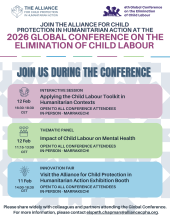
Join Us at the 6th Global Conference on the Elimination of Child Labour
Task Force Member Organisations








Key Tools

Inter-Agency Toolkit | Child Labour Case Studies

Find ALL 34 Case Studies in the Inter-Agency Toolkit on Preventing and Responding to Child Protection in Humanitarian Action!
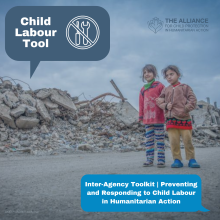
Inter-Agency Toolkit | Child Labour Tools
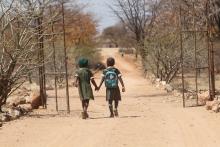
Find ALL 19 Practical Tools in the Inter-Agency Toolkit on Preventing and Responding to Child Protection in Humanitarian Action!
Inter-Agency Child Labour Toolkit | Preventing and Responding to Child Labour in Humanitarian Action
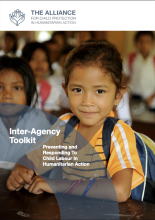
Every day, millions of children worldwide experience the consequences of violent conflicts, climate change, disasters and epidemics. In times of crisis, when people are forced to flee their homes, schools close, jobs are lost and the availability of services decreases, child labour becomes a coping mechanism for many families in distress. It deprives children of their childhood, their potential
Resources

Child Labour Tool | Measuring Child Labour in Humanitarian Settings
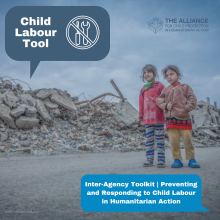
Child Labour Tool | Psychosocial Impacts of Child Labour
Child Labour Tool | Child Labour Risk Matrix
Child Labour Tool | Supporting At-Risk Children and Empowering Girls
Child Labour Tool | Preventing Child Labour Risk Factors Related to Humanitarian Action
Child Labour Tool | Safety Planning
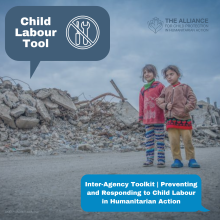
Child Labour Tool | Child Labour Key Messages
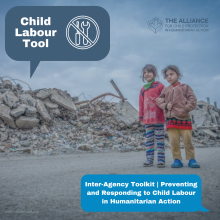
Child Labour Tool | Child Labour Information Sources
Webinars
Global Launch | Inter-Agency Toolkit: Preventing and Responding to Child Labour in Humanitarian Action
Webinar | COVID-19 and Child Labour

Child Labour Task Force Leads