


Led By: Plan International
Contact us at: cltf@alliancecpha.org
Our Mission
To ensure practical coordination and collaboration amongst humanitarian responders and development actors at the global level to strengthen the quality and coordination of child labour preparedness, prevention and response actions in emergencies at country level.
The Task Force provides a platform to identify and seek to address common challenges in child labour in emergencies programming, providing a collective technical voice on child labour issues in emergencies for other core pieces of work such as humanitarian standard setting, inter-sectoral collaboration, and global advocacy and policy work related to child labour.
Key Priorities of the Child Labour Task Force
Technical Tools, Standards, and Guidance: Inter-agency Child Labour in Humanitarian Action Toolkit is available and disseminated at local, national, regional and global levels.
Capacity Building: Humanitarian responders have enhanced knowledge and competencies to prevent and respond to (the worst forms of) child labour in emergencies.
Coordination, Policy, and Advocacy: Child labour in humanitarian settings is integrated/reflected in the agenda’s of relevant global, regional and local platforms, including but not limited to 8.7 Alliance and other Task Forces under the Alliance for Child Protection in Humanitarian Action.
Latest News
Join Us at the 6th Global Conference on the Elimination of Child Labour

Task Force Member Organisations










Key Tools

Inter-Agency Toolkit | Child Labour Case Studies

Find ALL 34 Case Studies in the Inter-Agency Toolkit on Preventing and Responding to Child Protection in Humanitarian Action!
Inter-Agency Toolkit | Child Labour Tools
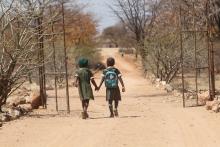
Find ALL 19 Practical Tools in the Inter-Agency Toolkit on Preventing and Responding to Child Protection in Humanitarian Action!
Inter-Agency Child Labour Toolkit | Preventing and Responding to Child Labour in Humanitarian Action
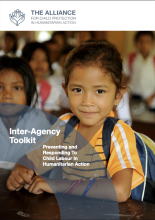
Every day, millions of children worldwide experience the consequences of violent conflicts, climate change, disasters and epidemics. In times of crisis, when people are forced to flee their homes, schools close, jobs are lost and the availability of services decreases, child labour becomes a coping mechanism for many families in distress. It deprives children of their childhood, their potential
Resources

Inter-Agency Toolkit: Supporting the protection needs of child labourers in emergencies
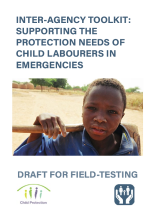
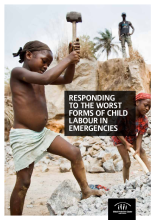
Responding to the Worst Forms of Child Labour in Emergencies
Webinars
Global Launch | Inter-Agency Toolkit: Preventing and Responding to Child Labour in Humanitarian Action
Webinar | COVID-19 and Child Labour

Child Labour Task Force Leads