

Normas mínimas para la protección de la infancia

Dirigido por: International Rescue Committee y UNICEF

Ponte en contacto con nosotros: cpms.wg@alliancecpha.org

Nuestra misión

El Grupo de trabajo sobre las normas mínimas de protección de la niñez (CPMS por sus siglas en inglés) establece condiciones participativas para que la dispciplina pueda crear normativas sobre la protección de la niñez y adolescencia en la acción humanitaria, promueve el uso y institucionalizarlas además de identificar lecciones aprendidas con el fin de mejorarlas.

Normas mímimas de protección a la niñez
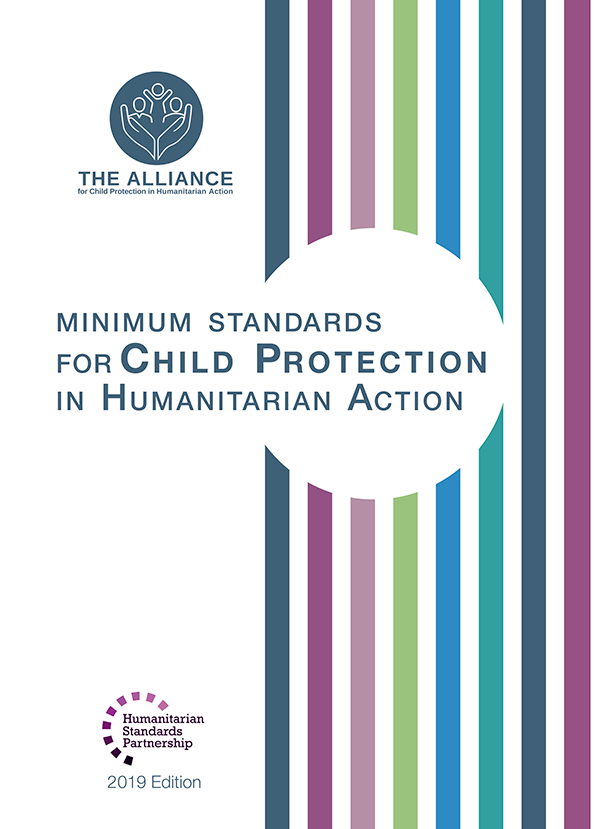
Uno de los materiales humanitarios usados más extensamente, las normas mínimas de protección de la niñez representan una solución de eficacia comprobada para los operadores de protección de la niñez que buscan refinar su perfil profesional y mejorar las intervenciones de sus organizaciones.
 
Descubra más información, aquí

Aplicación de las normas mínimas en todas las disciplinas

Cada profesional humanitario tiene una responsabilidad y un papel que debe desempeñar para proteger a niños y niñas y promover su bienestar. La colaboración entre disciplinas es crucial para lograr este objetivo y aprovechar al máximo los recursos disponibles.
 
Descubra cómo, aquí

Latest News

The CPMS is Now Available in Polish and more!

Poster
The Minimum Standards for Child Protection in Humanitarian Action (CPMS) are now available in Polish and more, expanding access to critical guidance for child protection practitioners worldwide. The CPMS sets out essential principles and best practices to protect children in emergencies, providing a framework for effective, high-quality responses. These available translations ensure that more...

New Resources for Working Across Sectors

Poster
The whole humanitarian system has a role to play in realising children’s rights, including their right to protection. Greater collaboration, action, and investment are needed to ensure all humanitarian interventions are safe, accessible, and child protection sensitive. When protecting children is a central and common objective across sectors, it contributes to greater accountability to children...

Prioridades

El grupo de trabajo sobrellevará las siguientes actividades durante y después del 2022:

  • Supervisar el lanzamiento continuo de la edición 2019 de las normas mínimas
  • Promover el uso de las normas mínimas en todas las disciplinas
  • Producir materiales multimedia de capacitación
  • Asistir a las agencias humanitarias a que institucionalicen las normas mínimas
  • Garantizar que los materiales estén disponibles en árabe, francés y español;

Key Tools

Indicators to Measure Cross-sectoral Contributions to Children’s Protection and Well-being

Cover

The whole humanitarian system has a role to play in realising children’s rights, including their right to protection. Greater collaboration, action, and investment are needed to ensure all humanitarian interventions are safe, accessible, and child protection sensitive. When protecting children is a central and common objective across sectors, it contributes to greater accountability to children

Minimum Standards for Child Protection in Humanitarian Action

CPMS Handbook 2019 Edition

The Minimum Standards for Child Protection in Humanitarian Action 2019 Edition equip humanitarians seeking to protect children effectively with the most comprehensive and up-to-date best practice so they can deliver professional programs.

Working Together

Working Together cover

How do we, as humanitarian workers, effectively collaborate to improve children’s protection and well-being? This Inter-Sectoral Framework aims to serve as a collective steer for doing just that: centring children and their protection needs across all programs, sectors, and responses. It has been co-developed through engagement with practitioners from across sectors in humanitarian, refugee and

Enhanced CPMS Indicators Table

Enhanced CPMS Indicators Table

An easy-to-navigate PDF, the Enhanced CPMS Indicators Table includes the 28 Child Protection Minimum Standards and their indicators with type, target values and explanatory notes plus suggested computation methods and data source examples. Developed by the Assessment, Measurement and Evidence Working Group, this tool is part of the measurement framework of the CPMS 2019 edition.

Resources

CPMS Standard 25: Nutrition and Child Protection

Nutrition and Child Protection
Standard: Children and their caregivers, especially pregnant and lactating women and girls, have access to safe, adequate and appropriate nutrition services.

CPMS Standard 24: Health and Child Protection

Health and Child Protection
Standard: All children have access to quality protective health services that reflect their views, ages and developmental needs.

CPMS Standard 28: Camp Management and Child Protection

Camp Management and Child Protection
Standard: Camp management activities address the needs and protection concerns of children affected by forced displacement.

CPMS Standard 26: WASH and Child Protection

WASH and Child Protection
Standard: All children have access to appropriate water, sanitation and hygiene services that support their dignity and minimise risks of physical and sexual violence and exploitation

Child Safeguarding and Health

Child Safeguarding and Health
This document outlines some potential child safeguarding risks of health programmes, and gives suggestions on how to manage them to ensure children are as safe as possible.

CPMS Standard 23: Education and Child Protection

Education and child protection
Standard: All children have access to quality education that is protective and inclusive and that promotes dignity and participation throughout all essential activities.

CPMS Standard 21: Food security and child protection

Food Security and Child Protection
Standard: All children affected by humanitarian crises live in food secure environments that mitigate and respond to child protection risks.

CPMS Standard 22: Livelihoods and child protection

Livelihoods and child protection
Standard: Caregivers and working-age children have access to adequate support to strengthen their livelihoods.

Webinars

Webinar | An Introduction to Prevention with the Child Protection Minimum Standards

Poster
Join us for an engaging an interactive webinar on an Introduction to Prevention with the Child Protection Minimum Standards. This webinar will include guest speakers from the Alliance Child Labour and UASC Task Forces, as well as the prevention-expert, Alliance coordinator, Hani Mansourian. There will also be lots of examples and time for questions, activities and discussion! We look forward to...

Webinar | How to: Self-Assessment Process for the Child Protection Minimum Standards

Poster
Join the Alliance CPMS Working Group for an interactive webinar on "How-to: The Self-Assessment Process for the Child Protection Minimum Standards". This webinar will be a 60-minute session held in English with support available for French & Spanish speakers. We look forward to your participation!

Webinar | What's New? The 2019 Edition of the Minimum Standards for Child Protection in Humanitarian Action (CPMS)

Poster
This webinar - the first in a series to explore the 2019 edition of the CPMS - will introduce the 2019 edition of the Minimum Standards for Child Protection in Humanitarian Action (CPMS), now available on the Alliance's website . Susanna Davies and Joanna Wedge, co-leads of the CPMS Working Group, will share the major changes in the 2019 edition, answer your questions, and share options and...

Live Q&A | Child Neglect in Humanitarian Settings

Cover
Join the Alliance for a Live Q&A on on the report, Child Neglect in Humanitarian Settings. Date: Thursday, 24 Jan 2019 Time: 8am (New York) / 1pm (London) / 2pm (Geneva) / 4pm (Nairobi) / 8pm (Bangkok) Participation in the live Q&A will offer a deeper understanding of the evidence on the prevalence, patterns and impacts of child neglect in humanitarian contexts, and the recommendations for further...
Webinar | Child Protection Minimum Standards Revision - Application in practice and next steps

 Cover
Since the Child Protection Minimum Standards (CPMS) were launched six years ago, these standards have become an important reference to help ensure that measures to protect children are a central component of all humanitarian action. As part of launching the next stage of the consultation and revision process to update the standards, PHAP and the Alliance organised an online session on 19 June 2018...

Pre-Recorded Audio | Protection of Children During Infectious Disease Outbreaks

 Cover
The Alliance for Child Protection in Humanitarian Action hosted a global webinar introducing the newly-released Guidance Note: Protection of Children During Infectious Disease Outbreaks (IDOs) and associated briefing paper. These recordings and associated transcipts are from that webinar. Children are particularly vulnerable during epidemics or pandemics, but inter-agency guidance on how to...

Webinar | Developing and Using Case Studies for CPiE Training Purposes

 Cover
Using the Child Protection Minimum Standards (CPMS) mainstreaming case studies (and facilitators guide), Samantha Newman shared her professional experience of developing and using case studies specifically for training child protection workers in humanitarian settings in this webinar.

Webinar | Sexual Violence and Exploitation of Boys in Humanitarian Settings

Poster
A panel explores the latest learning on sexual violence and exploitation of boys in humanitarian settings. The webinar includes discussion on how to get more comfortable addressing the topic during trainings and community outreach sessions.

Webinar | Engaging Humanitarian Learners - Strengthening Child Protection within Environments of Compounded Stress

Poster
This lively discussion led by colleagues from the Global Trauma Project looked at helping workshop participants transition from front-line, overstretched humanitarian workers to learners for a day (or week). It included lots of tips, examples, and resources.

Webinar | Designing and Implementing CPiE Learning and Development Strategies

Cover
In this webinar, Natalie McCauley presents the Alliance's approach to developing and using CP L&D strategies given the limited resources of humanitarian settings. Based on her experience supporting dozens of field operations, she walked us through the steps and issues that need to be considered to ensure success.

Media

CPMS Standard 21: Food Security and Child Protection

CPMS Standard 21: Food Security and Child Protection

CPMS Standard 23: Education and Child Protection

CPMS Standard 23: Education and Child Protection

CPMS Pillar 4: Standards to Work Across Sectors

CPMS Pillar 4: Standards to Work Across Sectors

«Hannah’s New Job» — Becoming a Child Protection Practitioner in Humanitarian Settings

CPMS Standard 9: What Is SGBV and How To Address It in Humanitarian Settings

Standards to Work Across Sectors

Video | Introducing the 2019 Edition of the CPMS

CPMS STANDARD 17 WEBINAR

Webinar Recordings: Child Neglect in Humanitarian Settings
Cover

Hannah has a new job

This is Samira

Child Protection for Minimum Standards Working Group Leads

Wajahat Ali, International Rescue Committee

Ilenia de Marino, Plan International