
Safe Access and Protective Learning Environments

Safe physical learning spaces encompass a broad range of interventions that include both the presence of protective infrastructure and the absence of protection risks. Safe learning spaces promote the general well-being of learners and education personnel and enable learners to fully engage in the learning process. Determining potential hazards and protection risks is achieved through collaborative or complementary assessments that allow for essential information gathering to inform joint or integrated interventions. Interventions may address the: 

  • Physical space to mitigate protection issues, increase safety for all, and ensure infrastructure is resilient to future shocks (E.g.: site selection, accessibility of site for all, provision of gender-segregated water and sanitation facilities) and
  • Policies, practices, and behaviors (E.g.: supporting positive discipline, disciplinary policies updated and inclusive of SGBV, bullying, etc.) that reduce harm or potential risks to learners and education personnel. 

Safe access and protective learning environments are inclusive of all center-based programming with shared child protection and education interventions, including Child Friendly Spaces, ECD centers, and Formal and Non-Formal Learning Programs.
 Cover
The sections in the Field Manual cover the basic elements for implementing the MRM. The annexes provide additional or detailed information and some specific examples that may be used or adapted for country-specific needs.
Cover
These Guidelines describe the purpose and focus of the MRM; specify the leadership, roles and responsibilities of implementing actors; describe the MRM architecture and information flow; outline reporting requirements; and highlight the critical linkage of the MRM to response programming and...
 Cover
Save the Children has developed a project that aims to link the global work done on protecting education from attack to what happens at school level in affected countries. Schools as Zones of Peace is a Save the Children led project that aims to secure boys and girls’ protection at school, and avoid...
Cover
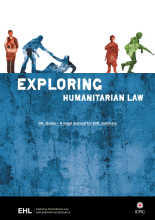
Exploring Humanitarian Law (EHL) is a resource pack for teachers to introduce students aged 13 to 18 to the basic rules of international humanitarian law. It was designed by the CICR in close association with the Education Development Center, Inc. (EDC). The learning materials, which provide 36...
Cover
This Guidebook for planning education in emergencies and reconstruction aims to support educational authorities in providing equal access to education of quality for children affected by conflict or disaster.
Cover
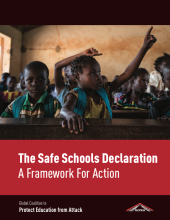
This Framework for Action seeks to provide governments with a non-exhaustive list of suggestions, recommen- dations, and examples that can assist them as they determine the appropriate way to implement the commitments made through endorsement of the Safe Schools Declaration. It can also assist other...
Cover
Parties to armed conflict are urged not to use schools and universities for any purpose in support of their military effort. While it is acknowledged that certain uses would not be contrary to the law of armed conflict, all parties should endeavour to avoid impinging on students’ safety and...