

Theory of Change: Prevent and Respond to Child Marriage in Humanitarian and Forced Displacement Settings
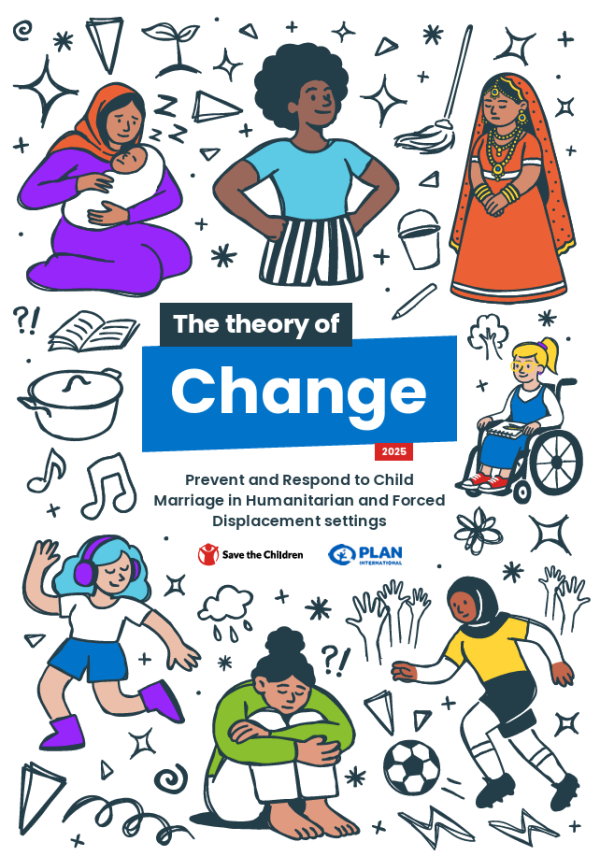
The theory of change to prevent and respond to child marriage in humanitarian and forced displacement settings has been developed as part of a collaboration between Plan International (Plan) and Save the Children (SC). The theory of change (TOC) is premised on research conducted on child marriage in diverse humanitarian settings in Jordan and Uganda (refugee settings), Zimbabwe (food insecurity) and the Philippines (internal conflict and IDPs), in partnership with the Women's Refugee Commission (WRC) and the Human Rights Centre (HRC) at the University of California, Berkeley. It considers existing evidence on child marriage across all settings and builds on what is already known and proven to be effective. It draws on the global leadership on child marriage prevention and response from several organisations: Girls Not Brides; UNFPA-UNICEF’s Global Programme to End Child Marriage; programmatic work from Plan International’s Adolescent Programming and Girls' Empowerment in Crisis Settings Initiative; Save the Children’s Preventing and Responding to Child, Early, Forced Marriage and Unions Technical Guidance; IRC’s Girl Shine Programme Model; and Girls Decide: Life skills to protect and empower girls affected by migration and displacement – among others.
Plan and Save the Children held a co-design workshop together with research partners WRC and HRC in January 2022 to jointly review research findings and design the TOC structure. A Joint Technical Review Group comprised staff from Plan and Save the Children, with technical insights from WRC and HRC. In 2022–23, with the contribution of Save the Children Denmark, this TOC was piloted and integrated into a one-year education and protection programme in Jordan. This TOC will be reviewed based on programming impact and revised accordingly.
This theory of change is designed to support integrated programming that centres on adolescent girls’ needs and priorities when preventing, mitigating and responding to child marriage in crisis settings. The TOC can be used to develop stand-alone programming to respond to child marriage, or to add components into broader sectoral programming such as within Child Protection. It is intended to be contextualised and adapted to ensure that girls and their communities are driving the design and implementation.
- 79 views