

Protecting Children in Climate Shocks and Disasters
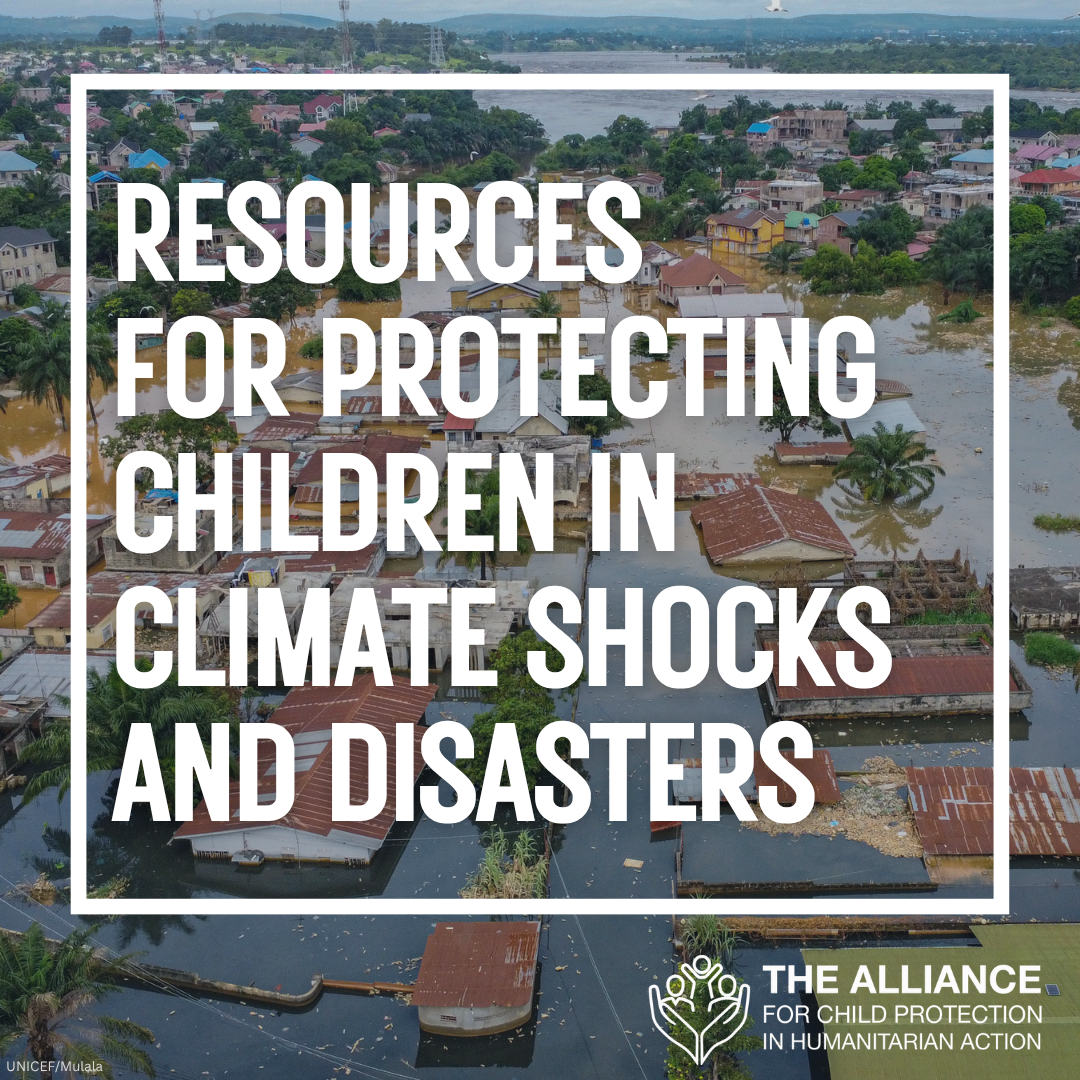
Protecting Children in Climate Shocks and Disasters
Supporting preparedness, prevention, and response to climate-related protection risks for children
Climate-related shocks and disasters triggered by natural hazards can have devastating consequences for children, families, and communities. Events such as floods, droughts, extreme heat, and severe storms can disrupt essential services, separate families, increase displacement and food insecurity, and expose children to heightened risks of violence, abuse, neglect, and exploitation.
Climate patterns such as El Niño and La Niña can further intensify these risks, contributing to extreme weather events and humanitarian needs across multiple regions at the same time.
This resource hub brings together practical guidance, tools, and learning resources to support preparedness, prevention, and response to child protection risks associated with climate shocks and natural hazard-induced disasters.
Resources are organised by hazard below and will continue to be updated as new materials become available.
El Niño and La Niña:
El Niño and La Niña can influence rainfall, temperatures, and weather patterns across different regions, increasing the likelihood or severity of hazards such as droughts, floods, storms, and extreme heat.
Understanding anticipated impacts can help child protection actors prepare early, identify emerging protection risks, and adapt programmes before humanitarian needs escalate.
Preparedness and Early Action Resources:
- Primary Prevention Framework for CPHA [EN, ES, FR, AR]
- Guidance Note: Primary Prevention of Family Separation
- CPMS Standard 7: Dangers and Injuries – Video [EN, AR, TR]
- CPHA Frontliner Getting Started Learning Package [EN, ES, FR, AR, TR, PL, UK]
- Embracing Knowledge and Expertise: Women’s Leadership and Participation in Addressing Climate-Driven Humanitarian Emergencies Across Asia and the Pacific
- Securing and Adapting Birth Registration Systems in Response to Climate Change-Induced Disasters
- Child Protection in Disasters and Emergencies - Public Awareness and Public Education Messages [EN, AR]
- We Need to do Better: Climate-related Disasters and Child Protection in Southeast Asia
Cross-Cutting Climate and Child Protection Resources:
The impacts of climate-related emergencies often overlap. These resources can support child protection preparedness and response across different types of climate-related child protection risks.
Cross-Sectoral Collaboration:
- Working Across Sectors Starter Kit [EN, ES, FR, PT]
- Working Across Sectors Resource Hub [EN, ES, FR, AR]
- Toolbox: Integrated Child Protection and Food Security Programming in Humanitarian Action [EN, FR]
Cash and Child Protection:
- Cash and Voucher Assistance and Child Protection in Humanitarian Action
- Designing Cash and Voucher Assistance to Achieve Child Protection Outcomes in Humanitarian Settings [EN, ES]
- E-Course: Cash and Voucher Assistance (CVA) and Child Protection
Infectious Disease Outbreaks:
- Protecting Children in Infectious Disease Outbreaks Hub [EN, ES, FR, AR]
- Infectious Disease Outbreaks Mini-Guides [EN, ES, FR, AR]
Child Rights:
- Climate Action Policy Paper: Children & Climate Change
- Children’s Climate Risk Report 2026
- Vulnerable Child and the Climate Crisis: Why We Must Keep Children At The Center Of Climate Action
- A Threat to Progress: Confronting the effects of climate change on child health and well-being [EN, ES, FR, AR]
Learning and Development:
- Learning Needs Analysis on the Intersectionality of Child Protection in Humanitarian Action and the Climate Crisis
- CPHA Learning Resource Mapping, with dedicated section on Climate and CP related learning resources
- Webinar: Exploring the Impacts of the Climate Crisis on CPHA
Floods:
Flooding can result in displacement, family separation, disruption to schools and services, loss of livelihoods, and increased exposure to violence, exploitation, and other protection risks.
Resources:
- Child Protection Competency Framework for Camp Coordination and Camp Management Actors [EN, ES, FR]
- Collaboration Tip Sheet: Camp Coordination and Camp Management (CCCM)
- South and Southeast Asia Flood Response Resources
- Field Handbook on Unaccompanied and Separated Children [EN, ES, FR, AR]
- Toolkit on Unaccompanied and Separated Children [EN, ES, FR, AR]
- When the Water Took Everything: Psychosocial recovery and the future robustness of Pakistan’s flood-affected children and communities
Drought:
Prolonged drought can contribute to food insecurity, loss of livelihoods, displacement, and increased pressure on families and communities. These impacts can heighten risks including child labour, child marriage, family separation, neglect, and other harmful coping mechanisms.
Resources:
- Child Protection Competency Framework for Food Security Actors [EN, ES, FR]
- Recommendations | Enhancing Collaboration between Child Protection and Food Security Actors [EN, ES, FR, AR]
- Toolbox: Integrated Child Protection and Food Security Programming in Humanitarian Action [EN, FR]
- Field Handbook on Unaccompanied and Separated Children [EN, ES, FR, AR]
- Toolkit on Unaccompanied and Separated Children [EN, ES, FR, AR]
- Inter-Agency Toolkit | Preventing and Responding to Child Labour in Humanitarian Action [EN, ES, FR, AR]
Extreme Heat and Heatwaves:
Extreme heat can directly affect children's health and well-being while also disrupting education, livelihoods, essential services, and humanitarian operations. Children who are displaced, living in informal settlements, or without adequate shelter and access to water may face particular risks.
Resources:
- Protecting children from heat stress: A Technical Note [EN, ES]
- Safe from Wildfire Smoke
- Growing Up in a Warming World: How Wildfire Smoke Affects Early Childhood Development [EN, PT]
- Extreme Heat Affects Early Childhood Development and Health [EN, PT]
- The Brain Architects Podcast: Extreme Heat & Early Childhood Development
- ISS Policy Brief: Childhood at Risk on a Heating Planet – Exploring the impact of climate change on children without parental care
Tropical Storms, Cyclones, and Hurricanes:
Cyclones, hurricanes, typhoons, and other severe storms can cause sudden displacement, destruction of homes and infrastructure, family separation, and disruption to essential protection, education and health services.
Resources:
- Child Protection Competency Framework for Food Security Actors [EN, ES, FR]
- Collaboration Tip Sheet: Camp Coordination and Camp Management (CCCM)
- Field Handbook on Unaccompanied and Separated Children [EN, ES, FR, AR]
- Toolkit on Unaccompanied and Separated Children [EN, ES, FR, AR]
- Children uprooted in the Caribbean: How stronger hurricanes linked to a changing climate are driving child displacement [EN, ES]
If you know of additional resources to help child protection practitioners address climate-related risks to children, please contact info@alliancecpha.org.