
Foundational Areas of Work

Across humanitarian action, there are established best practices to ensure programs are context-specific, culturally responsive, effective, and efficient. Much of that is related to the process stakeholders take to determine the most effective and responsive programming, build relationships and work in a coordinated way with others to support families, schools / learning environments, and communities. Those practices and programming evolve as the context and needs of communities change across the life of a response. 

The protection of affected populations and provisions of basic services are the responsibilities of a country’s government. Education and Protection Clusters/coordination mechanisms must consider how their activities strengthen and support the government’s immediate and long-term response abilities.
 Cover
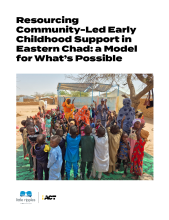
In refugee camp Alacha in eastern Chad, iACT is piloting an evolution of our community-led approach: one that begins not by creating something new for refugees, but by identifying and resourcing what already exists.While global humanitarian actors deliberate how best to support Sudanese refugees and...
 Cover
Save the Children has developed a project that aims to link the global work done on protecting education from attack to what happens at school level in affected countries. Schools as Zones of Peace is a Save the Children led project that aims to secure boys and girls’ protection at school, and avoid...
 Cover
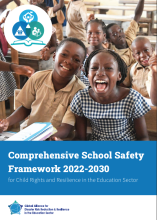
Compelled by the rising threats to children and education as a result of climate change, increased conflict, and the COVID-19 pandemic, the Global Alliance for Disaster Risk Reduction and Resilience in the Education Sector (GADRRRES) revised its Comprehensive School Safety Framework (CSSF). The CSSF...
Cover
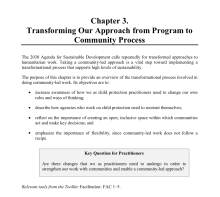
The 2030 Agenda for Sustainable Development calls repeatedly for transformed approaches to humanitarian work. Taking a community-led approach is a vital step toward implementing a transformational process that supports high levels of sustainability.The purpose of this chapter is to provide an...
Cover
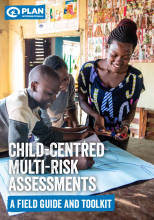
Plan International has recently developed a multi-risk assessment to support those working before, during and after disasters in understanding the multiple risks in a child’s environment, including pre-existing risks and new risks that emerge during and after crisis situations and their impact on...
Cover
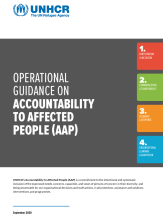
Accountability to Affected People (AAP) is widely used in the humanitarian community to refer to the related commitments and mechanisms humanitarian agencies have in place to ensure that communities are meaningfully and continuously involved in decisions that directly impact their lives. Accountabil...
Cover
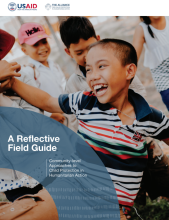
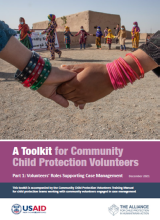
The Strengthening Community-level Child Protection in Humanitarian Action Capacity-building Package is intended to help practitioners adapt more community-driven approaches into their current programming, plan new programs with higher levels of community involvement, and build capacity in the...