
Safe Access and Protective Learning Environments

Safe physical learning spaces encompass a broad range of interventions that include both the presence of protective infrastructure and the absence of protection risks. Safe learning spaces promote the general well-being of learners and education personnel and enable learners to fully engage in the learning process. Determining potential hazards and protection risks is achieved through collaborative or complementary assessments that allow for essential information gathering to inform joint or integrated interventions. Interventions may address the: 

  • Physical space to mitigate protection issues, increase safety for all, and ensure infrastructure is resilient to future shocks (E.g.: site selection, accessibility of site for all, provision of gender-segregated water and sanitation facilities) and
  • Policies, practices, and behaviors (E.g.: supporting positive discipline, disciplinary policies updated and inclusive of SGBV, bullying, etc.) that reduce harm or potential risks to learners and education personnel. 

Safe access and protective learning environments are inclusive of all center-based programming with shared child protection and education interventions, including Child Friendly Spaces, ECD centers, and Formal and Non-Formal Learning Programs.
 Cover
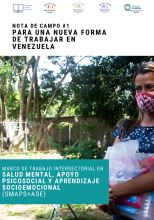
En la última década la evidencia científica sobre los impactos de las crisis en el bienestar subjetivo de NNA y la población en general han hecho que las estrategias de Aprendizaje Socioemocional (ASE), Salud Mental y Apoyo Psicosocial (SMAPS) sean un componente obligado de los marcos de respuesta...
 Cover
The MHPSS and EiE Toolkit offers access to key documents and resources of relevance to those working in the fields of Education in Emergencies (EiE) and of Mental Health and Psychosocial Support (MHPSS).Education in Emergencies plays a central role in the protection and promotion of children’s...
Cover
This module outlines 3 hours (180 minutes) of training activities and materials related to psychosocial support (PSS) and social and emotional learning (SEL) in emergency contexts. It includes supplementary activities to further understanding of PSS-SEL concepts, for an extended duration of 5 hours...
Cover
The MHPSS and EiE Toolkit offers access to key documents and resources of relevance to those working in the fields of Education in Emergencies (EiE) and of Mental Health and Psychosocial Support (MHPSS).Education in Emergencies plays a central role in the protection and promotion of children’s...
Cover
The MHPSS MSP outlines a set of activities that are considered to be of the highest priority in meeting the immediate critical needs of emergency-affected populations, based on existing guidelines, available evidence and expert consensus. Each activity comes with checklists of core and additional...
 Cover
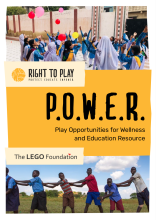
Play is critical to children’s social and emotional development and learning – especially in crisis.The Play Opportunities for Wellness and Education Resource (P.O.W.E.R.) is a collection of 100 gender-responsive play-based learning activities created to support parents, teachers, coaches, social...
Cover
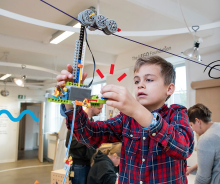
Discover mental health and psychosocial support (MHPSS) and SEL strategies. COVID-19 means children around the world must adjust to school closure, social distancing, school reopening (but looking different), and the probability of more school closures in future.These changes will impact children’s...
Cover
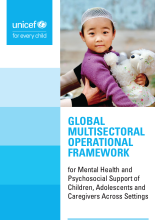
UNICEF’s operational framework aims to help UNICEF staff and partners develop programmes across the social ecological model and the mental health continuum of prevention, promotion and treatment to improve the mental health and psychosocial wellbeing of children, adolescents and their caregivers...