

Search

Webinar | Launch of Child Protection Case Management Training Package for Caseworkers
Find the training package here: https://alliancecpha.org/en/child-protection-case-management-training-p…
Report | From Evidence to Action: Centering Children's Voices during Infectious Disease Outbreak related School Closures and Reopenings
During 2021 and 2022, the Alliance and the Inter-agency Network for Education in Emergencies (INEE), commissioned Proteknôn Foundation for Innovation and Learning to conduct participatory research across three humanitarian settings—Lebanon, Democratic Republic of Congo, and Colombia—to explore the...
Background Paper | Child Labour and Education in Humanitarian Settings
In humanitarian situations, the risks of children being out of school and engaging in child labour are both significantly elevated, particularly for displaced, refugee, and migrant children. Hence, while education is critical for the successful prevention of and response to child labour in...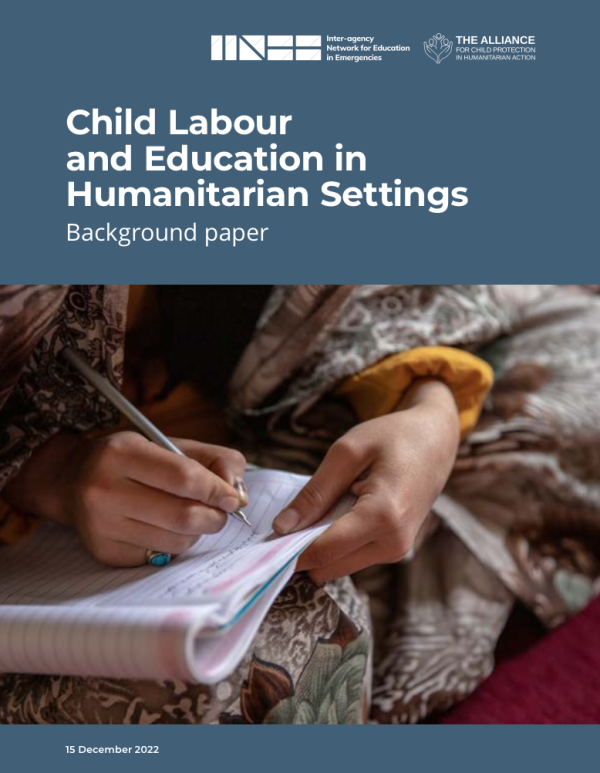
Hot Off the Press! Background Paper on Child Labour and Education in Humanitarian Settings
The Alliance Child Labour Task Force and the Inter-Agency Network for Education in Emergencies is pleased to share the latest background paper on Child Labour and Education in Humanitarian Settings! This paper proposes various actions, which have been adapted from the “Inter-Agency Toolkit...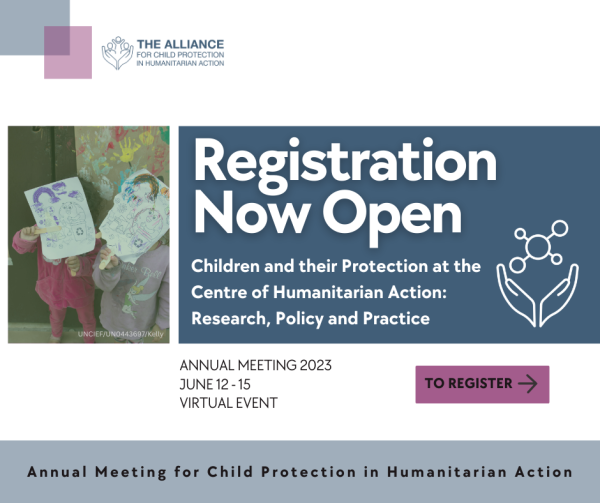
Registration Open! 2023 Annual Meeting for Child Protection in Humanitarian Action
The Alliance for Child Protection in Humanitarian Action (the Alliance) is organising the 2023 Annual Meeting for Child Protection in Humanitarian Action over a virtual platform on the 12th - 15th of June 2023. This includes four days dedicated to the theme of the meeting, Children and their...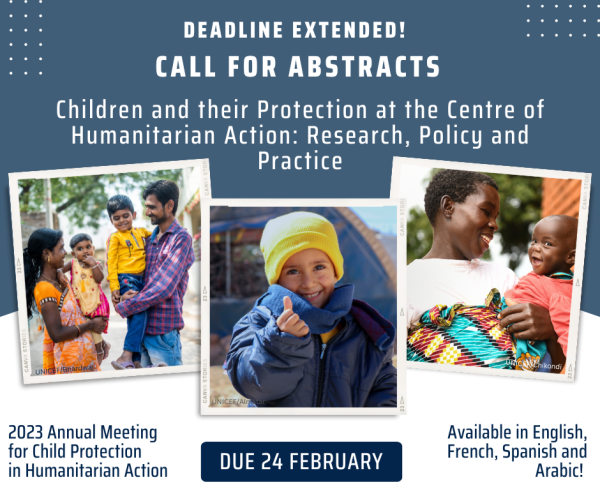
Infographic Deadline 25 April - Call for Abstracts for the 2023 Annual Meeting!
Abstract Update! Thank you those who submitted an abstract for either a knowledge/practice or strategic advocacy session. We are currently in the review process and will email if your submission has been accepted by 16 April 2023. But... the opportunity to submit an Infographic for the virtual...
A Research Summary by and for Young People | Children during COVID-19 : How were they impacted by school closures and what we can learn for the future?
This summary was written by seventeen research and round table participants aged 12 to 17 years from Colombia, Democratic Republic of Congo and Lebanon, Laura Lee (Proteknôn) and Bethel Lulie (Proteknôn), with support from Elspeth Chapman (The Alliance), Amanda Brydon (Save the Children...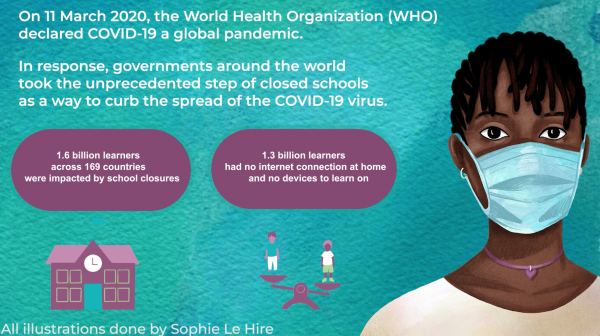
Children & Young People during COVID-19: How were they impacted & what we can learn for the future?
On 11 March 2020, the World Health Organization (WHO) declared COVID-19 a global pandemic. In response, governments closed schools to prevent the spread of COVID-19. 1.6 billion learners across 169 countries were impacted by school closures and 1.3 billion learners had no internet connection at home...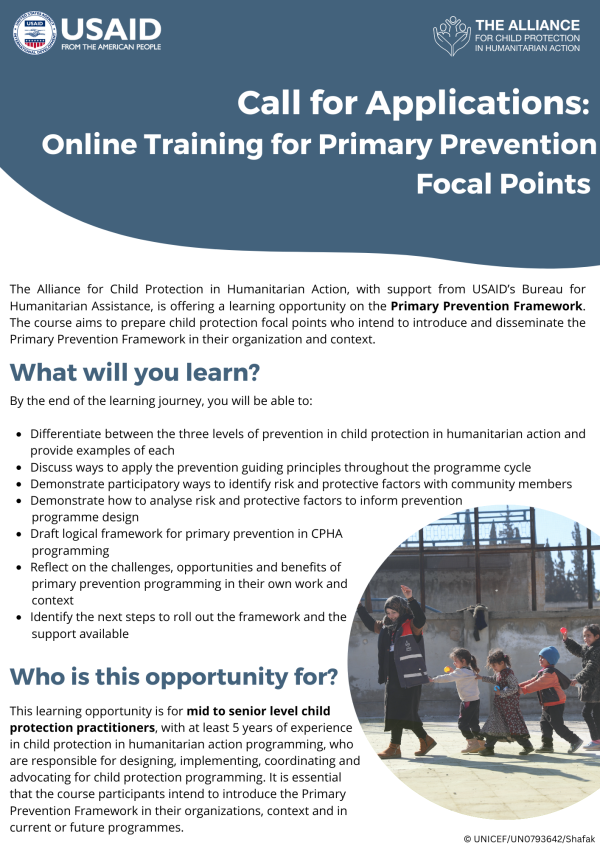
Call for Applications! Online Training for Primary Prevention Focal Points
The Alliance for Child Protection in Humanitarian Action, with support from USAID’s Bureau for Humanitarian Assistance, is offering a learning opportunity on the Primary Prevention Framework. The course aims to prepare child protection focal points who intend to introduce and disseminate the Primary...
Joint Submission on General Comment 26 of the Committee on the Rights of the Child on Children’s Rights and the Environment with a Special Focus on Climate Change
This submission has been prepared by the Advocacy Working Group (AWG). Several AWG members formed a sub-group to discuss the forthcoming General Comment 26 on children’s rights and the environment with a special focus on climate change, from the perspective of child protection in humanitarian...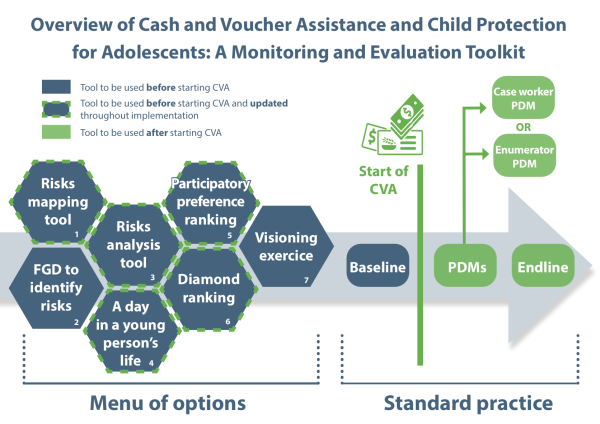
Monitoring and Evaluation Toolkit | Cash and Voucher Assistance and Child Protection for Adolescents
The Cash and Voucher Assistance and Child Protection for Adolescents: A Monitoring and Evaluation Toolkit is a resource for actors working in Monitoring and Evaluation, CVA (across sectors), child protection and adolescents programming. The toolkit is divided into two parts: Part 1 is comprised of...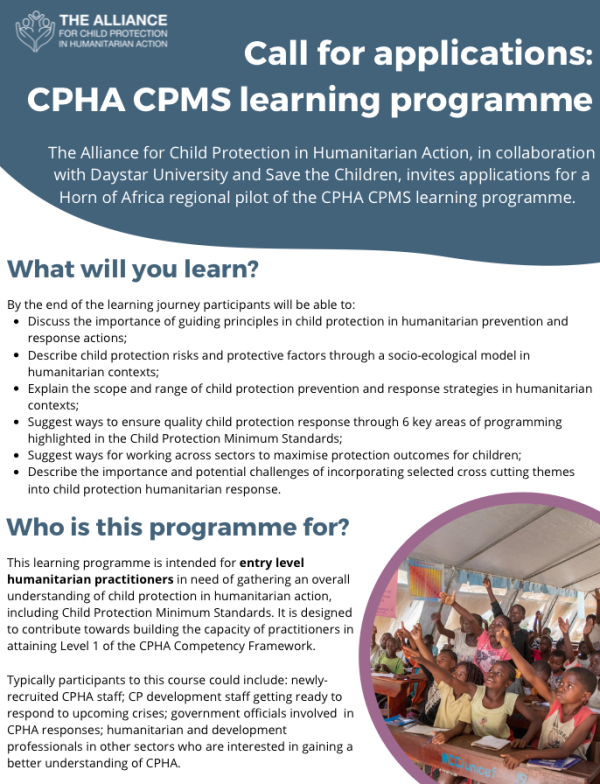
Call for Applications! CPHA CPMS Learning Programme
The Alliance for Child Protection in Humanitarian Action, in collaboration with Daystar University and Save the Children, invites applications for a Horn of Africa regional pilot of the CPHA CPMS Learning Programme. What will you learn? By the end of the learning journey participants will be able to...
CPHA Learner Profiles
What are Learner Profiles? Learner Profiles are fictional characters that we create to represent a stakeholder group. Specifically, the Alliance for Child Protection in Humanitarian Action's learner profiles consider the audience of the Alliance’s work, from the perspective of learning and...
CPMS Pillar 4: Standards to Work Across Sectors
Millions of children are facing increasingly complex humanitarian crises. Helping them cope and recover takes a wide range of support, including specialised child protection interventions. But no single sector has all of the knowledge, skills and resources to fully prevent risks, respond to children...
CPMS Standard 21: Food Security and Child Protection
The importance of collaboration between Child Protection and Food Security actors in humanitarian settings cannot be overestimated. For instance, jointly planned programs in the same locations can help mitigate the impact of food insecurity on children’s protection. This collaboration works both...
CPMS Standard 23: Education and Child Protection
Children are amongst the most vulnerable in humanitarian crises. Providing them with a safe passage to school and a protected place to receive an education is critical to their current and future well-being. In humanitarian settings, there are many links between Child Protection and Education...
Red Hand Day 2023
Today, 12th February is ‘Red Hand Day’, the international awareness day that aims to remind the international community to strengthen efforts to end the recruitment and use of children in armed conflicts. Although efforts to stop children from being recruited and used by armed actors remain high in...
CPMS Standard 24: Health and Child Protection
Standard: All children have access to quality protective health services that reflect their views, ages and developmental needs.
CPMS Standard 25: Nutrition and Child Protection
Standard: Children and their caregivers, especially pregnant and lactating women and girls, have access to safe, adequate and appropriate nutrition services.
CPMS Standard 26: WASH and Child Protection
Standard: All children have access to appropriate water, sanitation and hygiene services that support their dignity and minimise risks of physical and sexual violence and exploitation
CPMS Standard 27: Shelter and Settlement and Child Protection
Standard: All children and their caregivers have appropriate shelter that meets their basic needs, including safety, protection and accessibility.
CPMS Standard 28: Camp Management and Child Protection
Standard: Camp management activities address the needs and protection concerns of children affected by forced displacement.
CPMS Standard 21: Food security and child protection
Standard: All children affected by humanitarian crises live in food secure environments that mitigate and respond to child protection risks.
CPMS Standard 22: Livelihoods and child protection
Standard: Caregivers and working-age children have access to adequate support to strengthen their livelihoods.