
Enabling Interventions and Approaches
Across humanitarian action, there are established best practices to ensure programs clearly address children’s protection concerns and mitigate the risk of increased tensions or conflict. Much of this relies on the application of a variety of ‘lenses’ to analysis, monitoring and evaluation to ensure stakeholders have a deeper understanding of tensions, potential challenges, and opportunities to provide context-specific, relevant support to children and the programs meant to support them.
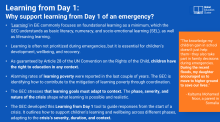
Learning from Day 1 is a practical guidance tool developed by the Global Education Cluster to support children’s learning and wellbeing from the very outset of an emergency, recognising that learning — including foundational skills, socio-emotional learning (SEL), and lifesaving knowledge — is a...
An estimated 272 million children and youth are currently out-of-school (UNESCO, 2025). Millions of these young people are accessing learning through non-formal catch-up, bridging or alternative learning programmes. Some of these are Accelerated Education Programmes (AEPs), which provide learners...
This slide deck is easy to use! There are five sections:Child Safeguarding Basics: This section is a 30-minute PowerPoint presentation that Cluster Coordination Teams can use to introduce child safeguarding to Education Cluster members. Child Safeguarding Across the Humanitarian Program Cycle (HPC)...
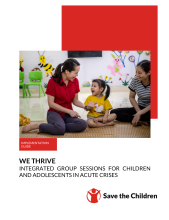
We Thrive is a Save the Children package of integrated group activities for children and adolescents to be used use in rapid onset humanitarian crises, in safe and appropriate group spaces, such as community centres, Child Friendly Spaces, Temporary Learning Spaces, Health Centers or Feeding centers...
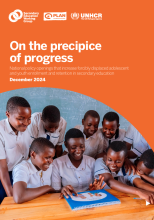
National-level policies are vital to the realization of forcibly displaced adolescent and youth engagement in secondary education. As multiple global-level frameworks and commitments are non-binding, national-level laws and the policies formulated within them help provide the political, social, and...
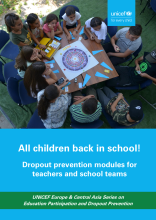
These modules aim to provide school teams, including school directors, teachers and other education professionals working in or with schools, with the knowledge, skills, attitudes and tools to support the (re)enrolment of all children in schools, particularly those most marginalized, and to prevent...
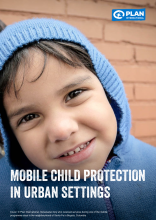
This case study describes the mobile child protection programming implemented in Bogota, Colombia, responding to the needs of migrants and refugees from Venezuela and other vulnerable people in 2019.This case study describes the mobile child protection programming implemented in Bogota, Colombia...
As a charitable and philanthropic fund working to ensure that every child around the world has access to education, the Luminos Fund recognizes its responsibility to safeguard the welfare of all children who come into contact with our organization. We believe everyone has the right to live free from...
This Complete Guide is the standard reference tool for Education Cluster Teams to learn how to embed Child Safeguarding (including PSEA of children) in Education Coordination.It is accompanied by a separate Minimum Actions Guide which outlines key essential actions to focus on to get started...
Save the Children’s vital humanitarian work represents around 50% of all the work that we do and is often made up of a mix of life-saving and life-sustaining work. Because of this, humanitarian workers are placed in a position of trust by the populations they serve.Save the Children is committed to...
The Teaching Respect for All Implementation Guide is intended for use by policymakers, teachers, school staff, students, parents and communities. Through specific questions and learning activities, users can analyse and confront their own biases. Users are encouraged to reflect upon possible actions...
The current COVID-19 outbreak has provoked social stigma and discriminatory behaviours against people of certain ethnic backgrounds as well as anyone perceived to have been in contact with the virus.
Based on the INEE Conflict Sensitive Education Pack, and developed in coordination with INEE members and Truscribe, this whiteboard video illustrates conflict sensitive strategies for each of the INEE Minimum Standards five domains. This video is available in English, French, Arabic, and Spanish...
In light of the far-reaching consequences of the COVID-19 pandemic on education systems around the world, with 89% of the world’s student population affected by COVID-19 school closures as of 1 April 2020, governments and partner organizations have ramped up efforts to facilitate the continuity of...
The Global Education Cluster (GEC) has been working to build the evidence base around cash and voucher assistance (CVA) in education in emergencies (EiE), resulting in the publication of the “Cash and Voucher Assistance for Education in Emergencies Synthesis Report and Guidelines” in 2019. This...
In recent years, cash transfer programming (CTP) has significantly increased as a proportion of humanitarian assistance. In the right circumstances, CTP can facilitate better use of scarce resources, stimulate local economies to assist recovery, and respect the dignity of people in crisis. While...
The increased use of cash-based transfers over the past decade has brought opportunities for efficiency gains in humanitarian aid, greater choice and flexibility for people receiving assistance and increased transparency, while providing an opportunity to support local economies. Pledges to further...
The Accelerated Education Programme (AEP) Checklist was created as a tool for programme designers, implementers, evaluators and agencies to use alongside the AEWG Guide to the Accelerated Education Principles. The purpose of this tool is to encourage AEPs to examine how their own programmes align...
The inter-agency Accelerated Education Working Group (AEWG) reviewed and distilled a set of global good practices and guidelines for AEPs. This guide helps establish what is considered good practice, and is intended to evolve into a standard.Existing AEPs may not reach this standard. However, it is...
This policy brief offers recommendations to strengthen the policy environment within which non-formal education is delivered and highlights key considerations for those planning, designing and implementing non-formal programmes that seek to meet the core education and skill development challenges...
The purpose of this toolkit is to provide practical guidance (tools, examples, and resources) for designing a comprehensive distance learning strategy that covers an entire education sector or system.This toolkit will help users:Understand what distance learning is, why it is important, and how it...
The Guidelines and Practical Strategies for Strengthening Support to Government Authorities, School Leaders, Teachers and Community Members in their Efforts to Improve Educational Quality for All aim to provide guidance and practical strategies to key actors working to both provide and support...
In response to the challenge to education systems presented by the global COVID-19 pandemic, UNICEF and the World Bank, with funding from GPE, have created a set of global public goods in partnership with Cambridge Education to support the delivery of quality remote learning. The seven Resource...
Due to the COVID-19 pandemic, in which approximately 1.5 billion children and youth (nearly 85% of the world’s learners) were affected by school closures,1 the AEWG anticipates that catch-up programmes will be deployed extensively to meet the needs of learners who missed out on several months to...
Non-formal education (NFE) programs offer an alternative to formal education for out-of-school children, adolescents, and youth, and for learners for whom the formal education system is not a good fit, providing a flexible, responsive education that is better suited to the unique circumstances of...
This document will help practitioners across all thematic areas better understand how to link children and their families to existing services and programmes, in order to help the most vulnerable and marginalised children overcome barriers to safely accessing or returning to education and learning.
The referral form is intended to be used by humanitarian organisations working with persons with MHPSS problems. The referral form and guidance note are tools to facilitate inter-agency referrals, referral pathways, trainings and workshops, and as a means to document referrals in accordance with...
This document is a template referral pathway between education institutions and child protection authorities and other key services. It provides a broad, step by step process for schools to follow when:there is suspicion that a student (child or adolescent) has experienced child abuse (violence...
These guidelines have been developed to respond to an existing gap in child safeguarding practices, which often fail to recognize the specific requirements and adaptations needed to ensure the safety of children with disabilities.The guidelines build on consultations with children and youth with...
This guide and 20 accompanying tools support practitioners to design, implement and monitor feedback mechanisms on humanitarian programmes.At Plan International, child-friendly feedback mechanisms are key to our accountability towards children, young people and their communities. These mechanisms...
- 653 views