

Welcome to the collaborative initiative between the Alliance for Child Protection in Humanitarian Action (CPHA) and the Inter-Agency Network for Education in Emergencies (INEE). This joint effort aims to enhance the wellbeing of children and youth affected by emergencies, crises, and forced displacement through integrated programming. Our work focuses on fostering closer collaboration across all stages of the Humanitarian Programme Cycle. For more information, contact us at: info@alliancecpha.org.
Use the buttons below to explore tailored guidance, tools, and resources to help you integrate CPHA and EiE programming in your context.
Please use the ES - FR - العربية Buttons on the top, right hand side of your screen to find the page in Spanish, French, and Arabic. You can also find the page in Portuguese here.
Cross Sector Collaboration - Overview
CPHA and Education in Emergencies (EiE) are natural partners in humanitarian response. The two sectors have much in common: both are child-focused, are priorities for affected populations, and, through collaboration, they reinforce each other’s sectoral outcomes. Mainstreamed, joint, and integrated programming across CPHA & EiE add value to affected populations, service providers, and donors. Working together can create more efficient, better-targeted, and more effective programs that result in improved outcomes for children and young people (Alliance and INEE, 2021).
The Alliance and INEE are committed to strengthening the intersection between child protection and education during humanitarian crises at all levels of the Humanitarian Programme Cycle and at every stage in a response. The Joint Pledge at the Global Refugee Forum 2023 outlines three areas of shared responsibility and collaboration. They are:
What impact do we want to have with integrated programming:
- Improve child well-being and healthy development
- Improve learning outcomes through holistic support to well-being
- Prevent and mitigate certain protection risks while improving access, retention, and success in learning
- Prevent children “slipping through cracks” between sectors by centering the child in multi-sectoral, integrated programming
- Contribute to efforts to transform humanitarian delivery, and support the localisation agenda for stronger systems and communities in crises
This online resource helps users navigate the key resources that have been developed to support joint and integrated programming, collects tools, good practice examples and case studies, and provides guidance for advocacy and external engagement.
Supporting Change
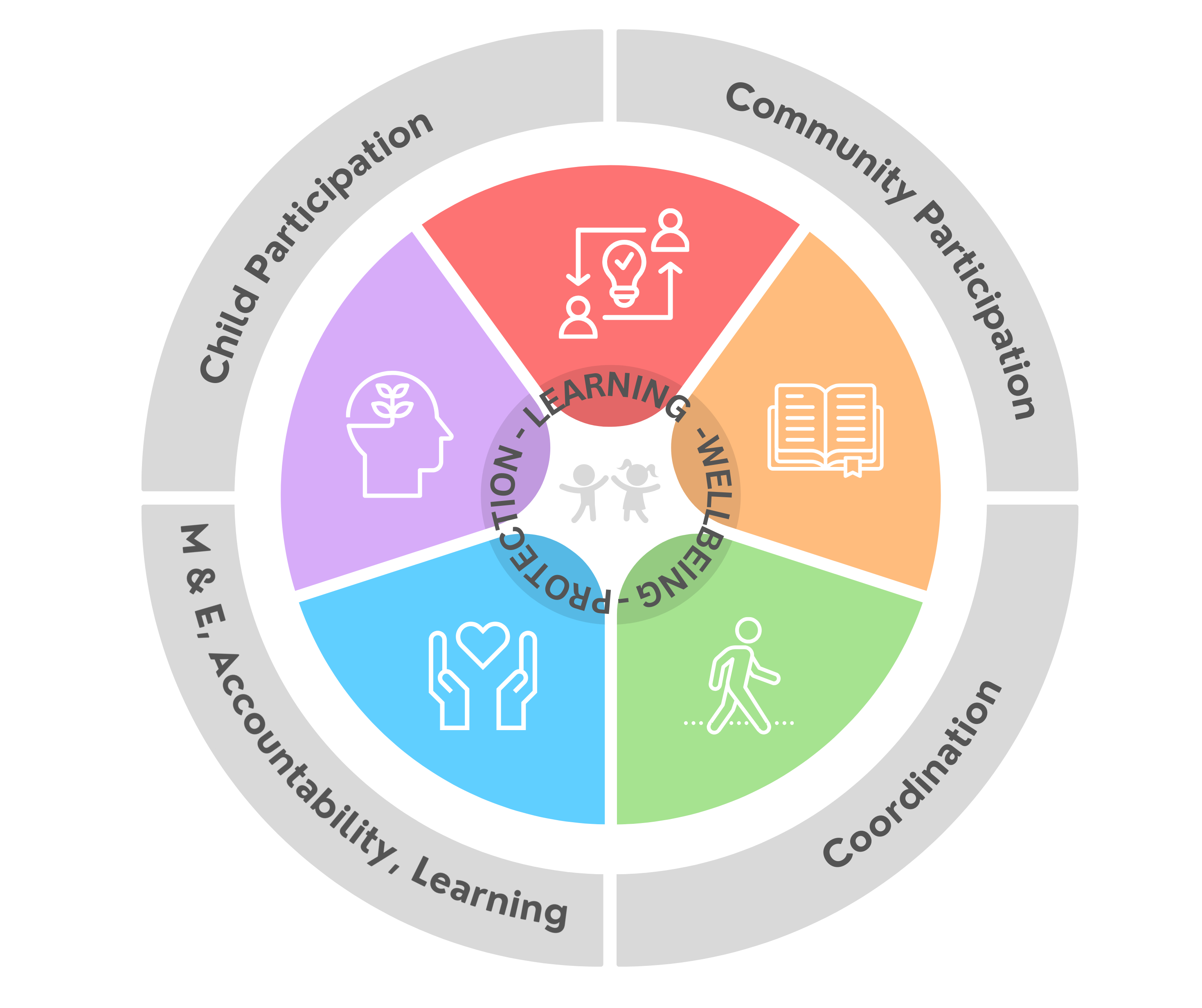
This page helps users navigate the key resources and tools available to support joint and integrated programming, including good practice examples and case studies, and provides guidance for advocacy and external engagement. Sections are organised around key types of resources and includes an expanded collection of resources aligning with the Supporting Integrated Child Protection and Education in Humanitarian Action Guidance Note programmatic areas of work. The Guidance Note is organised by programmatic areas. Programmatic areas align with the domains and standards from both the Alliance’s Child Protection Minimum Standards (CPMS) and INEE’s Minimum Standards for Education (INEE MS).
Each section of the Guidance Note includes:
- Overview: A shared vision for integrated child protection and education programming in humanitarian responses.
- Guiding Questions: Initial questions to initiate discussions between the two sectors. Questions are organised against the Socio-Ecological Model. Your discussions are guided by the specific circumstances of your context.
- Indicators: Sample list of indicators to determine impact, output, or outcome. MEAL plans must fit the specific objectives and context of each intervention. Many national line ministries and authorities have standard indicators which should be referenced when possible.
- Resources: Key resources that support integrated programs selected through a consultative process with sector practitioners. Adaptation or contextualisation of resources to the realities of communities, systems, and structures impacted by crisis is essential.
- Examples: Spotlight examples of integrated programming in practice.
Looking for something specific? Use the bulleted lists to filter your search. Each area can be filtered for language with the most common languages being Arabic, English, French, Portuguese, and Spanish.



Children Who are at Risk of Their Protection Rights Being Violated (CPMS)
- Adolescents and Youth
- Younger Children (Early Childhood Development and Education)
- Children with Disabilities
- Gender
- Children on the Move: Refugee/IDP/Stateless/Migrant
- Unaccompanied and Separated Children (UASC)
- Harmful Cultural Practices
- Children in Contact with the Justice System
- Child Labor
- Children Associated with Armed Forces and Groups (CAAFAG)


Key Resources – Implementation

CP-EiE Collaboration in Coordination Framework and Summary
The Global Education Cluster and Global Child Protection Area of Responsibility have committed to work together to strengthen inter-sector coordination between child protection and education, and jointly developed a CP-EiE Collaboration Framework.
The CP-EiE Collaboration framework supports Education and CP coordination teams’ predictable and coherent collaboration throughout the Humanitarian
Guidance Note | Supporting Integrated Child Protection and Education Programming in Humanitarian Action

This Guidance Note supports the Alliance and INEE’s CPHA-EiE Joint Initiative by orienting both sectors to opportunities for program integration. Through collaboration, both sectors aim to deliver on the Sustainable Development Goal 4 to provide/ensure “inclusive and equitable quality education and promote lifelong learning opportunities for all” by 2030. They lift up the centrality of children’s
Working Together

How do we, as humanitarian workers, effectively collaborate to improve children’s protection and well-being? This Inter-Sectoral Framework aims to serve as a collective steer for doing just that: centring children and their protection needs across all programs, sectors, and responses. It has been co-developed through engagement with practitioners from across sectors in humanitarian, refugee and
Key Resources – Policy, Advocacy and Research
Evidence Paper | No Education, No Protection: What school closures under COVID-19 mean for children and young people in crisis-affected contexts

The COVID-19 pandemic has resulted in unprecedented levels of school closures, affecting up to 90% of learners globally. While it was deemed necessary to close schools and other education institutions to reduce transmission of COVID-19, the paper shows how this has clearly had negative consequences for the wellbeing of children and young people, especially those in crisis contexts.
Following on
Position Paper | Collaboration Across Child Protection in Humanitarian Action and Education in Emergencies

In this paper, the The Alliance and INEE set out the evidence supporting collaboration and integration between the sectors, providing a rationale for cross-sector work grounded in child well-being and holistic development. The paper includes a summary of challenges and opportunities, and draws out clear recommendations for systematic and planned collaboration. This paper is built on extensive
Key Resources – Training and Development
Global Education Cluster E-Learnings on Child Protection
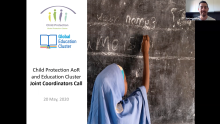
This meeting recording captures the May 2020 Joint Coordinators Call, where the facilitators cover the CP-EiE Collaboration Initiative and Framework, collaboration in the COVID-19 context, including a country update on Somalia and discussion on collaboration, and applying this learning to the HNO and HRP.
The Alliance E-Learning Hub
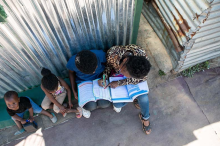
The Alliance is committed to capacity strengthening for the child protection in humanitarian action workforce. Together, we develop quality learning materials and deliver them through face to face, online and blended learning opportunities.
The Alliance E-Learning Hub is home to all of the Alliance’s learning and development resources. The Learners Area houses our self-paced learning content
Learning and Development with INEE
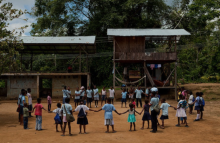
As the world faces increasingly complex and protracted crises, the number of children and young people whose right to education is at risk continues to grow. To meet these complex needs, all practitioners and stakeholders must continue to develop their EiE knowledge and skills so that they are able to ‘ensure the right to a quality, safe, and relevant education for all who live in emergency and
